UK Hypersonics Network Biannual Forum
06 July 2026 |
UK Hypersonics Network Biannual Forum
The Forum was held at Sheffield Hallam University on the 6th of July 2026. The event brought together participants representing 21 organisations from across academia, industry and government, providing an opportunity for the community to review progress since the launch of the Network, share ongoing activities and strengthen collaborations across the UK Hypersonics community.
Prof Matthew McGilvray, Project lead, outlined the progress made since the launch meeting, including developments in governance, the establishment of the Special Interest Groups (SIGs), the Flight Experiment Working Group and introduced the flexible funding scheme. These updates demonstrated the significant progress made in developing the Network's technical structure and highlighted the next phase of activities aimed at supporting collaborative research and future hypersonic flight experimentation.
Early Career Researcher (ECR) session
Dr Alistair John, University of Sheffield, opened the session with an overview of the Race2Space initiative, and described how the programme is engaging undergraduate students in the design, manufacture and testing of sounding rockets and experimental flight systems. Dr John invited the UK Hypersonics Network to participate in the Race2Space Symposium, helping to strengthen links between the two communities and create new opportunities for student engagement.
Undergraduate students, PhD researchers and postdoctoral researchers had the opportunity to present their research through a series of short technical presentations and poster presentations. We would like to congratulate all the Early Career Researchers who presented at the event, and a special mention to Oliver Dow who received the Best ECR Presentation Award.
Damon Miah (Swansea University), Title: Simulation/Optimisation of Hypersonic Propulsion Systems.
Oliver Dow (Loughborough University), Title: Flight Dynamics and Control of a Hypersonic Glide Vehicle.
Raahil Nayak (Sheffield Hallam University), Title: Transpiration Cooling Strategies in the Hypersonic Boundary Layer.
Roshan Frost and Joshua Matthews (Imperial College London), Title: An undergraduate project designing a sovereign flight experiment and its impact on undergraduate involvement in hypersonics research.
Thomas van Mierlo (Swansea University), Title: Accelerating the discrete velocity method of solving the Boltzmann BGK equation for rarefied gas flows.
Dongdong Xu (University of Leicester), Title: Instability of streaky high-supersonic boundary layers over cooled walls.
|
|
| |
|
|
| |
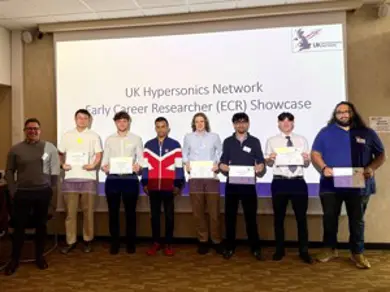
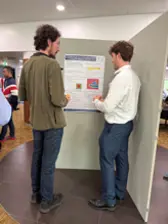
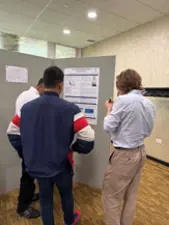
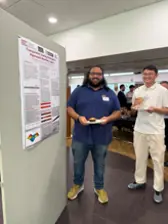
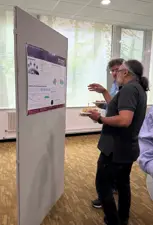
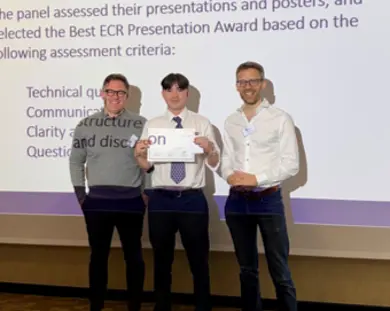
The quality of the presentations demonstrated the breadth of emerging hypersonics research taking place across the UK and generated valuable discussion around common technical challenges, future collaborations and opportunities for student involvement in the wider Network.
Invited Lecture: Professor Rodney Bowersox
Professor Rodney Bowersox from Texas A&M University delivered an invited lecture on the Boundary Layer Turbulence (BOLT) flight experiment programme. Drawing on his experience leading one of the world's foremost hypersonic flight research programmes, Professor Bowersox discussed the motivation behind BOLT, the experimental design, flight instrumentation and the scientific insights obtained from the programme. His lecture provided an excellent example of how carefully planned flight experiments can be used to generate high-quality validation data and highlighted the importance of close integration between numerical modelling, ground testing and flight experimentation.
Special Interest Groups sessions
The afternoon concluded with breakout sessions for the Materials Fluid–Thermal–Structure Interaction and Hypersonic Boundary-Layer Transition Special Interest Groups. These sessions provided an opportunity for participants to discuss current research priorities, identify common technical challenges and begin defining collaborative activities that will form the basis of future Network outputs. Discussions focused on benchmark problems, validation requirements, future workshops and opportunities for collaboration across institutions, with particular emphasis on ensuring that technical activities contribute towards the long-term objective of developing a scientifically robust pathway to a future UK hypersonic flight experiment.


