Hypersonic Flight Experiment Lecture Day
Location
Ashmolean Museum, Oxford
Date & Time
Monday 20 Jul 2026 9:00 - Monday 20 Jul 2026 17:00
A series of lectures will be delivered by world-leading experts in hypersonic flight testing and sounding rocket experiments. The sessions will provide attendees with insight into recent hypersonic flight missions, experimental methodologies, and advances in flight-test campaigns, covering both historical landmark programmes and current developments in the field.
This will be provided for free to UK academics and at a cost of £75 to industry participants. Please register your interest by clicking the "Book" link below.
- Flight test 1 | Reconstructing the Hyshot flights. Dr Terry Cain, Gas Dynamics Ltd
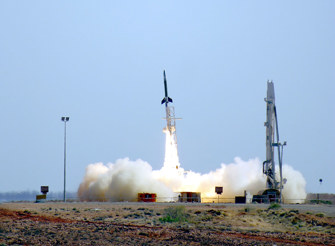 |
The first and second University of Queensland's Hyshot flights are reconstructed from on-board sensor data. It is shown that Hyshot-1 failed due to roll-pitch coupling during launch and that perhaps Hyshot-2 was lucky to escape the same fate. Techniques are demonstrated that made it possible to determine the vehicles altitude, attitude and speed throughout the successful Hyshot-2 flight, from a relatively limited set of sensors. |
- Flight test 2 | Atmospheric entry capsules experiments. Prof Alexandre Martin, KRUPS
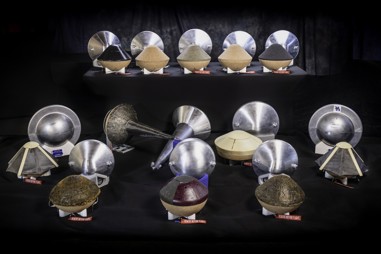 |
Atmospheric entry capsules provide a unique opportunity to obtain flight data in environments that are difficult or impossible to reproduce on the ground. This presentation examines the use of instrumented entry capsules as platforms for aerothermodynamic, thermal protection system, and demise investigations. Topics include capsule aerodynamics and stability, thermal protection system design, sensor selection and survivability, telemetry architectures, trajectory reconstruction, and methods for extracting scientifically useful data from highly constrained flight opportunities. Particular attention is given to the tradeoffs between scientific objectives, mass, power, volume, and cost. Examples from the KRUPS and KREPE flight programs, as well as other recent entry missions, are used to illustrate key design decisions, successful engineering approaches, and lessons learned from flight |
- Flight test 3 | A Sounding Rockets in Hypersonic Research. Frank Scheuerpflug, DLR
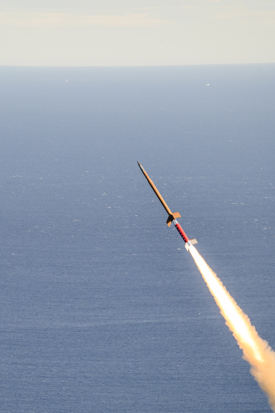 |
Founded as a launch service provider for sounding rocket flight missions in the sixties, Mobile Rocket Base (MORABA) has conducted more than 500 sounding rocket missions. For the longest time, focus of the research supported was on astronomy, atmospheric physics and microgravity research. Two decades ago, hypersonics research and testing became a relevant field of engagement, spurring developmental efforts to adapt our traditional sounding rocket portfolio and flight systems to the special needs of hypersonic testing. This encompassed advances in thermal hardening of exposed flight structures and suppressed trajectory designs providing flight Mach numbers up to eight for more than two minutes. Four flight missions also involved vehicle configurations that deviated from the traditional, rotational symmetry of sounding rockets, posing additional challenges to flight stability. The talk provides a summary of our flights in service of hypersonic research from the angle of flight performance and developmental advances on the launch vehicle side. It also strives to give an outlook onto currently planned missions and ongoing launch vehicle developments. |
| 9:00 - 9:30 | Registration |
| 9:30 - 10:30 | Introduction & Wind tunnel overview |
| 10:30 - 11:00 | Coffee break |
| 11:00 - 12:30 | Flight test 1 | Reconstructing the Hyshot flights. Dr Terry Cain, Gas Dynamics Ltd |
| 12:30 - 13:30 | Lunch |
| 13:30 - 15:00 | Flight test 2 | Atmospheric entry capsules experiments. Prof Alexandre Martin, KRUPS |
| 15:00 - 15:15 | Coffee break |
| 15:15 - 16:45 | Flight test 3 | Sounding Rockets in Hypersonic Research. Frank Scheuerpflug, DLR |
Dr Terry Cain
A University of Queensland graduate in Mechanical Engineering, Terry's Master Eng. Sc. was awarded for the development of a Compression Ignition Driven shock tube supervised by Prof Ray Stalker. After a brief stint in the RAAF and as an RA in the physics department at the Australian National University Terry moved to the UK in 1987 and started his third degree supervised by Prof Terry Jones at Oxford. This was a study of moderately under-expanded jets in the Oxford gun tunnel. The work was sponsored by the UK MOD to obtain experimental data relevant to the infrared signature prediction of rocket exhaust plumes. Towards the end of the degree Terry joined New College as the W.W Spooner Junior Research Fellow which allowed a three year post-doctoral term, part of which was spent in hypersonics and part on a flight test of a Rolls Royce laminar flow nacelle mounted on a VFW614 Fokker flown at DLR Braunschweig. At the end of the postdoc Terry joined the DRA as a Principal Scientist with responsibility for the experimental programme in the hypersonic tunnels at Farnborough. The Sustained Hypersonic Flight Experiment (Shyfe) and the UK contribution to Hyshot were successful attempts to move the focus away from strategic systems after the fall of the Berlin wall. That event also led to Terry experimenting with plasma aerodynamics both in the UK and at TsAGI near Moscow while the Russians were keen to collaborate.
Following the transition to QinetiQ Terry left to form Gas Dynamics Ltd with Craig Walton and Marc Zanchetta. The first customer was ESA with a scramjet flight test project that Terry spoke about last year. Today he will talk about the UQ Hyshot programme with a focus on the high angle of attack re-entry of the sounding rocket.
Prof Alexandre Martin
Alexandre Martin obtained his Ph.D. (2005) in Mechanical Engineering at École Polytechnique de Montréal (Québec, Canada), after which he joined the University of Michigan (Ann Arbor, MI) as a postdoctoral fellow. Since 2010, he has been a faculty member in Mechanical and Aerospace Engineering at the University of Kentucky (Lexington, KY), where he currently holds the WR Stamler Chair Professorship. Dr. Martin is the recipient of a 2025 NASA Exceptional Public Service Medal, and the 2022 ISS Innovation Award. He is an Associate Fellow AIAA, a Fellow of St. Catherine's College at the University of Oxford, and holds the title of University Research Professor at the University of Kentucky.
Frank Scheuerpflug
He is a senior engineer, project manager and group lead at the German Aerospace Center’s Mobile Rocket Base. After graduating from TU Munich as an Aerospace Engineer, he started his professional career in 2007 as a Research Associate at Mobile Rocket Base. He has made contributions to launch vehicle analysis and development and led a number of sounding rocket borne research missions in the fields of microgravity and hypersonics.
He headed the development of the Red Kite Sounding Rocket motor, which is now in serial production and employed in a range of sounding rocket programs.
At present, he dedicates his professional work to further extension of suborbital launch vehicle capabilities, focusing on large solid rocket motors and guidance technologies.
A father of two, he enjoys family time and tries to pass on his passion for tech and nature.
For all enquiries, please contact: hypersonics-network-uk@eng.ox.ac.uk
